
Starting a senior home safety business in Florida is a highly lucrative, recession-proof, and deeply impactful career move for aspiring female entrepreneurs. As the baby boomer generation continues to age, traditional nursing facilities face unprecedented structural challenges, skyrocketing costs, and severe staffing shortages. This demographic pressure has forced families to seek alternative, residential-first safety solutions. By establishing a professional senior home safety business in Florida, you enter an underserved, high-margin market that directly addresses the needs of aging adults and their distant, worried families.
This business model represents one of the most viable, work from home businesses for women in Florida because of its exceptionally low overhead and rapid path to profitability. Unlike traditional home remodeling franchises or technical software businesses, this specialized practice focuses on environmental safety audits, physical hazard mitigation, and the smart, seamless integration of passive monitoring networks. As a professional consultant, you do not need to be a software programmer or a licensed building contractor. Your primary role is to serve as an environmental and technology architect, designing non-intrusive home modifications that allow older adults to remain independent without feeling watched.
Table of Contents
Why Florida is the Ground Zero for independent living technology for elderly
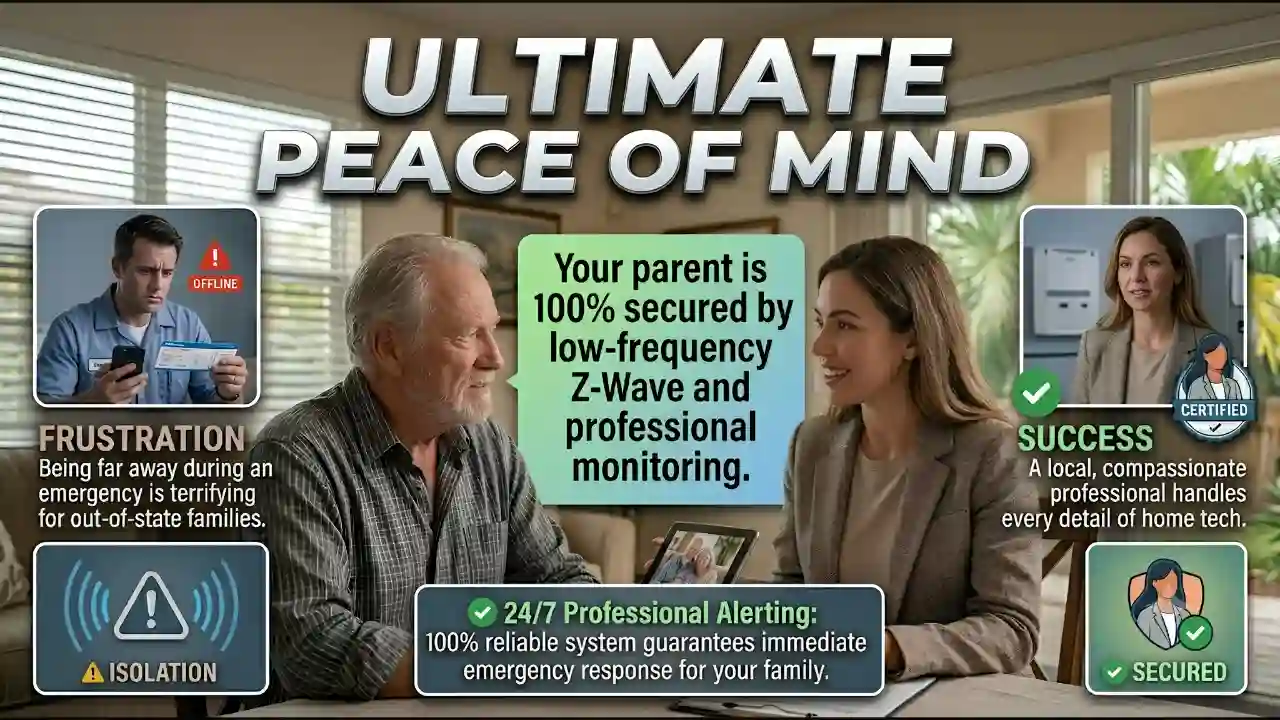
Florida is the demographic epicenter of the aging-in-place economy in the United States. According to state demographic data, over 4.5 million residents in Florida are aged sixty-five or older, with a significant portion concentrated in massive retirement developments like The Villages, Sun City Center, Century Village, and On Top of the World. Many of these retirees live independently, while their adult children reside thousands of miles away in the Northeast or Midwest. This geographic isolation creates massive parental safety concerns for families, making the adoption of independent living technology for elderly residents a critical non-negotiable expense.
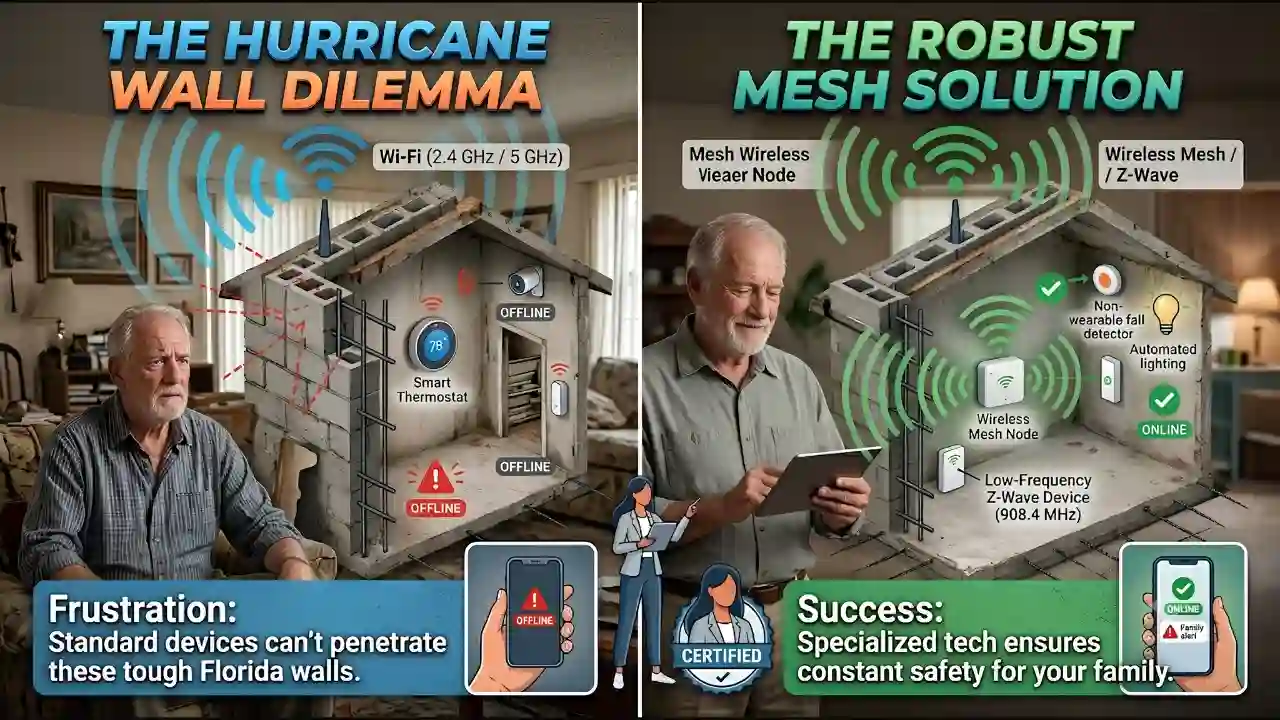
However, implementing technology in Florida properties presents a unique physical challenge that standard, off-the-shelf smart home setups fail to address. Most residential structures in Florida are built using Concrete Block Structure (CBS) construction, featuring thick exterior concrete blocks filled with structural rebar and heavy stucco to comply with strict local hurricane building codes. While concrete block construction is excellent for wind and storm protection, it acts as a severe radio-frequency (RF) attenuator. Standard 2.4 GHz and 5 GHz Wi-Fi signals are severely degraded when attempting to penetrate these dense, rebar-reinforced concrete partition walls.
A professional senior home safety business in Florida understands these technical realities. When standard consumer-grade smart devices drop offline due to concrete wall attenuation, a certified consultant designs a robust wireless mesh network or utilizes low-frequency Z-Wave protocols (operating at 908.4 MHz in North America) which penetrate concrete masonry much better than high-frequency Wi-Fi. This technical expertise prevents false alarms and guarantees that life-saving emergency alerts actually reach family members.
Why This Business Model is Uniquely Suited for Women in Florida
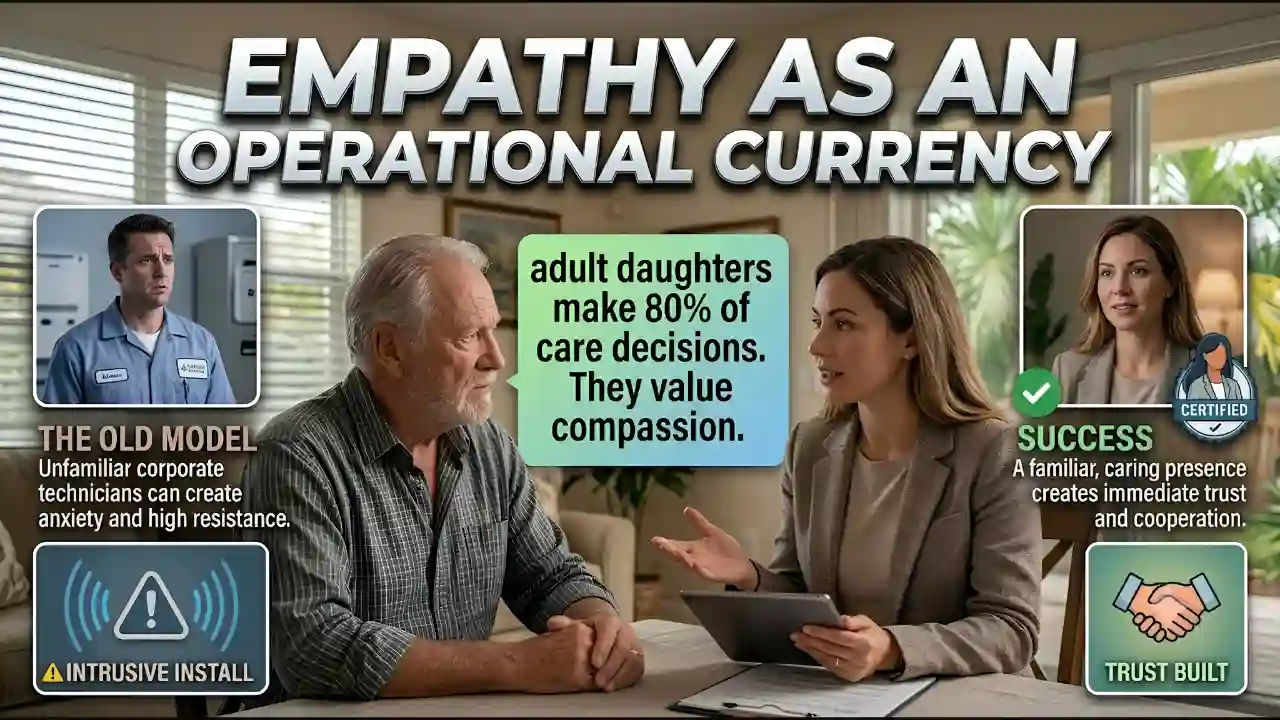
Relationship management, trust, and deep empathy are the primary operational currencies of the eldercare industry. Many elderly women who live alone are highly resistant to allowing unfamiliar, corporate-clad male technicians or security installers into their private spaces, particularly bedrooms and bathrooms where fall hazards are statistically most critical. A female entrepreneur entering the home brings an immediate sense of comfort, security, and professional patience. By launching a senior home safety business in Florida, you tap into a natural market preference for female-led, empathetic home evaluations.
Furthermore, the primary financial and logistical decision-makers for aging parents are almost always their adult daughters. These daughters, who are managing their own families and careers while coordinating care for their parents, seek professional advisors who communicate with absolute clarity and compassion. Operating a senior home safety business in Florida allows you to build peer-to-peer relationships with these decision-makers, offering structured home modifications that respect the senior’s autonomy.
Leveraging Empathy and Soft Skills in smart home technology for aging in place
A major operational failure of general technology installers is the tendency to over-complicate systems. Seniors do not want to interact with complex mobile applications, touchscreen control panels, or multiple remote controls. When deploying smart home technology for aging in place, your objective must be to make the technology completely invisible, passive, and automated.
An empathetic consultant evaluates the home through the eyes of a client dealing with low vision, arthritis, or early-stage cognitive decline. This perspective ensures that instead of installing complicated smart home hubs, you configure automated low-level night lighting, non-wearable fall detectors, and automatic stove shut-offs that require absolutely no behavioral changes from the senior. By understanding how to become a smart home tech consultant for seniors, you learn to design systems that protect the client while preserving their dignity and independence.
Who is Eligible to Start a Senior Home Safety Technology Business?
The eligibility requirements for this business model are highly accessible. You do not need formal technical credentials, a computer science degree, or a general contractor’s license to begin. If you can configure a standard home wireless router, pair smart plugs using a mobile app, and identify basic physical hazards like loose throw rugs or poorly lit steps, you have the foundational skills needed to succeed. The highly specialized aspects of the business, such as geriatric environmental design, can be learned through structured certifications.
To run a successful consulting practice, you must be patient, organized, and analytical. This is an exceptional transition career for former teachers, occupational therapy assistants, retired nurses, or real estate professionals who want to apply their existing communication and organizational skills to a high-paying, future-proof market.
This section contains the first of only two permitted bulleted lists in this entire guide, detailing the core eligibility criteria for launching your business:
- Core Professional Eligibility Standards:
- Basic Digital Literacy: Comfort with configuring dual-band wireless routers, pairing smart assistants, and managing cloud-based caregiver alert portals.
- Spatial Hazard Awareness: The ability to systematically identify structural physical hazards, such as inadequate lighting thresholds, unsafe flooring transitions, and unstable handrails.
- Empathetic Communication: A high level of patience and the ability to explain simple technology concepts to non-technical, elderly clients.
- Compliance Readiness: A commitment to registering your business entity, securing local tax licenses, and maintaining general liability insurance.
Starting an Aging in Place Business with No Money vs. Capital Investment
Aspiring business owners can easily scale this business model to match their current financial situation. You can choose to launch using a bootstrapping strategy that requires virtually no startup capital, or you can invest a modest amount of seed money to establish a more comprehensive, turn-key service from day one.
If you are starting an aging in place business with no money, you operate strictly as an advisory consultant. Your primary service is the physical safety audit and the creation of a customized technology blueprint. You charge a flat fee for your assessment and design expertise, and the client or their family purchases the recommended hardware directly from retail sources. You then charge a separate service fee to guide the family through the configuration process. This approach eliminates your need to carry inventory or purchase diagnostic equipment upfront, making it one of the most accessible low cost home based businesses for Florida women.
If you have capital to invest, you can transition into a higher-margin service model. By purchasing demo hardware kits, you can allow clients to interact with smart buttons and motion sensors during your initial consultation. You can also buy smart home safety devices at wholesale rates, package them with your design services, and capture the retail markup. This turn-key approach is highly attractive to busy out-of-state families who want a single professional to handle the entire process from assessment to final hand-off.
| Operational Factor | Bootstrapped Path (starting an aging in place business with no money) | Invested Path (Capital-Funded Model) | Primary Business Objective |
|---|---|---|---|
| Initial Registration | Operating as a sole proprietorship, using standard local county tax receipts and basic liability insurance policies. | Registering a formal LLC on Sunbiz, establishing a brand identity, and acquiring professional general liability insurance. | Establishing legal and professional credibility with local medical and legal referral sources. |
| Hardware Management | The client purchases all recommended sensors, smart plugs, and lighting elements directly from retail platforms. | You maintain a small inventory of high-quality, pre-tested smart devices purchased directly from wholesale distributors. | Capturing retail margins on hardware while simplifying the process for the client. |
| Service Execution | Conducting physical walk-throughs, writing customized safety blueprints, and providing virtual setup coaching. | Providing comprehensive physical installation, pre-configuring all wireless smart devices, and delivering hands-on training. | Delivering an premium, stress-free, end-to-end integration service for families. |
How to Become a Smart Home Tech Consultant for Seniors: Step-by-Step Action Plan
Building a professional consulting practice requires a methodical approach that addresses state licensing, local regulations, and physical hardware standards.
“The primary barrier to senior technology adoption is not the complexity of the hardware, but the lack of thoughtful, patient translation from digital interfaces to physical daily habits.”
To build a sustainable business, you must move systematically through licensing, hardware selection, and local community outreach.
Phase 1: Getting Certified in home safety technology for seniors in Florida
Your first step is to establish professional credibility. Because you will be advising vulnerable adults and their families on physical and digital safety, holding recognized credentials is vital for building trust. You should pursue the Certified Aging-in-Place Specialist (CAPS) designation, which is managed by the National Association of Home Builders (NAHB). This certification teaches you the physical mechanics of aging, common mobility challenges, and standard home safety protocols.
In addition to physical safety certifications, you should master the regulatory landscape of the state of Florida. You must register your business entity through the Florida Division of Corporations website, known as Sunbiz. You will also need to secure a Business Tax Receipt from your local county tax collector. Finally, you must acquire a comprehensive general liability insurance policy. This insurance is essential, as it protects your home-based business from potential liability claims related to hardware malfunctions or household accidents. By focusing on professional credentials, you establish a solid foundation for your home safety technology for seniors in Florida consulting practice.
Phase 2: Sourcing the best smart home devices for independent living in Florida
Once your business is legally established, you must select the hardware you will recommend to your clients. A successful consultant avoids complex, consumer-grade gadgets that require constant manual updates. Instead, you must curate a portfolio of the best smart home devices for independent living in Florida, focusing on stability, long battery life, and simplicity.
Your selection must also address the unique construction styles of Florida homes. Unlike northern homes built with wood studs and drywall, most homes in Florida utilize Concrete Block Structure (CBS) construction to meet strict hurricane building codes. These dense concrete block walls act as wireless signal barriers, frequently degrading standard 2.4 GHz and 5 GHz Wi-Fi networks. As a consultant, you must understand how to deploy mesh Wi-Fi routers or utilize specialized Z-Wave and Zigbee repeaters to ensure safety sensors remain online throughout the entire property.
Phase 3: Launching low cost home based businesses for Florida women Safely
Marketing a home-based business in the senior space requires high-trust, grassroots networking rather than expensive online advertising campaigns. When launching low cost home based businesses for Florida women, your most valuable marketing assets are local professional partnerships.
Begin by introducing your services to local elder law attorneys, physical therapists, senior move managers, and home health agency directors. These professionals are in constant communication with families looking for practical ways to keep their elderly relatives safe at home. You can also offer to speak at local senior centers, civic organizations, or active adult communities, presenting educational topics such as simple home safety adjustments and the benefits of passive technology. This positions your senior home safety business in Florida as a trusted community resource rather than a high-pressure sales operation.
The Formula of the Business: Packaging Your senior home automation consulting services
To build a highly profitable business model, you should avoid charging flat hourly rates. Hourly pricing commoditizes your expertise and limits your earning potential. Instead, package your senior home automation consulting services into clear, value-driven tiers that address specific family requirements.
“True environmental safety is achieved not by adding screens and interfaces, but by eliminating physical friction so quietly that the senior forgets the technology is even there.”
By packaging your services, you make it easy for out-of-state family members to select the precise level of support their elderly parents require. This transparent pricing structure builds trust and clearly outlines the exact deliverables of each service phase.
| Package Name | Ideal Client Profile | Hardware and Software Integrations | Core Service Deliverables | Continuing Maintenance |
|---|---|---|---|---|
| Comprehensive Safety Blueprint | Active seniors seeking a preventative audit, or families who plan to purchase and install hardware themselves. | Complete physical assessment of lighting, trip hazards, Wi-Fi coverage, and moisture/temperature risks. | A detailed physical safety report and a customized smart device purchasing guide. | One follow-up phone consultation to answer questions during self-installation. |
| Core Independence Setup | Seniors experiencing mild mobility limitations, vision decline, or who require immediate fall prevention aids. | Automated night-path lighting, smart voice reminders, a simplified smart tablet, and environmental safety sensors. | Device pre-configuration, on-site hardware placement, and direct, patient training sessions. | Thirty days of phone support and minor configuration adjustments. |
| Continuous Care Monitor | Families managing care for seniors with cognitive challenges who require passive, remote safety oversight. | Radar-based non-wearable fall detectors, automated water shut-off valves, and smart medication dispensers. | Full professional installation, family alert portal setup, and direct training for local caregivers. | Quarterly remote system diagnostics, software updates, and signal strength verification. |
how do smart home devices help seniors age in place Safely?
A key aspect of your business operations is educating clients on how do smart home devices help seniors age in place. Many older adults are initially hesitant, associating technology with invasive security cameras or complicated interfaces. You must demonstrate how passive technology preserves their independence and protects their daily routines.
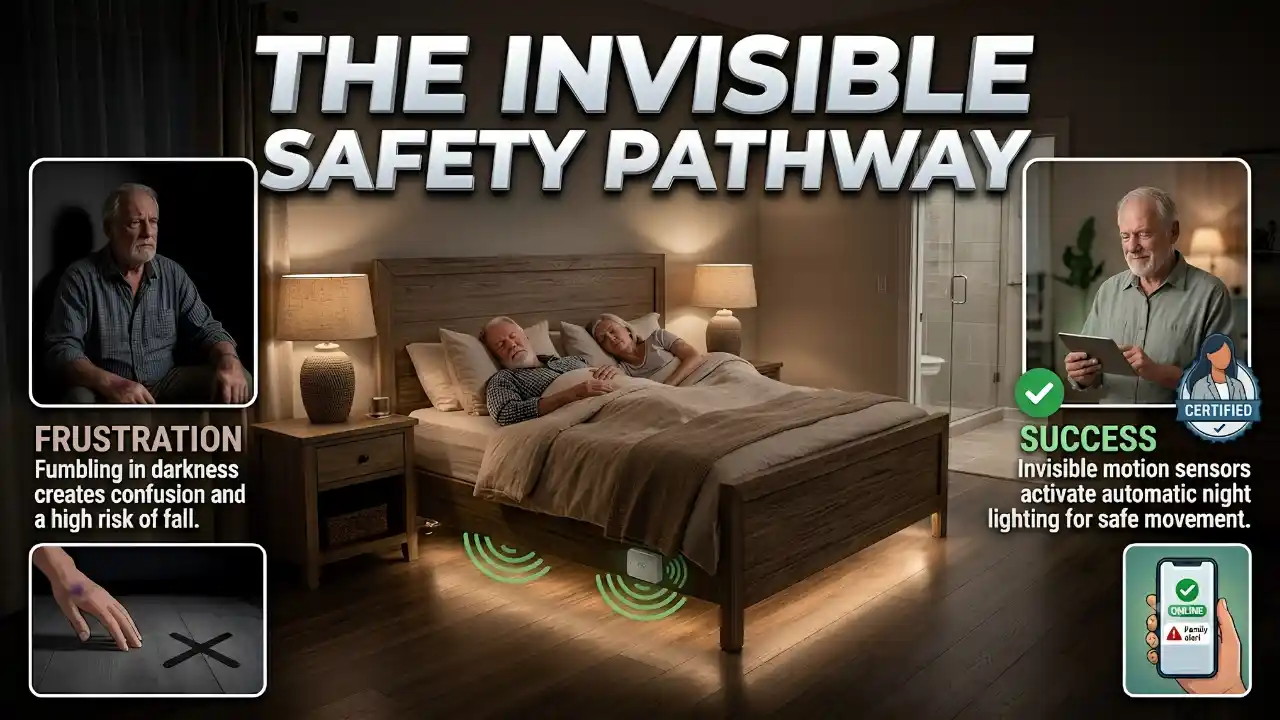
For example, bathroom falls at night are a major safety concern for seniors. By installing low-profile motion sensors under the edge of the bed frame, you can configure a system that automatically activates a soft, low-intensity light pathway leading to the bathroom the moment the senior swings their legs out of bed. This simple, automatic lighting pathway prevents them from walking in the dark or searching for light switches in low-visibility conditions.
Similarly, kitchen safety can be enhanced without restricting independence. Installing an automatic stove monitoring sensor allows the system to detect if a burner has been left unattended for a designated period and safely cut power to the appliance. This single safety measure protects the home from fire risks while allowing the senior to continue preparing their own meals confidently.
Pros and Cons of Launching profitable tech business ideas for women in Florida
Evaluating the operational advantages and challenges of this business model is essential for long-term success [1]. While researching profitable tech business ideas for women in Florida, you must assess how the physical demands, client profiles, and regulatory requirements align with your professional goals.
This section contains the second and final permitted bulleted list in this guide, outlining the balanced pros and cons of operating a senior home safety business in Florida:
- Operational Pros and Cons to Consider:
- Pro: Low Operational Competition. Most home automation providers focus on high-end entertainment systems or standard security packages, leaving the specialized aging-in-place tech niche largely underserved.
- Pro: High Profit Margins. Since you are charging for specialized expertise, home safety audits, and custom system design rather than generic labor, your business maintains high margins.
- Con: Emotional Responsibility. Because you are advising on senior home safety, you must be prepared for the emotional responsibility of working with vulnerable adults, even when your systems function correctly.
- Con: Extended Onboarding Timelines. Training older adults to use new systems requires exceptional patience and multiple, unhurried follow-up visits, which can increase project completion times.
To manage these challenges effectively, you should implement a structured risk-mitigation framework. The table below outlines how to manage these operational risks while maintaining a highly efficient home-based business.
| Operational Focus | Primary Challenge | Mitigation Strategy | Schedule Priority |
|---|---|---|---|
| Client Tech Support | Seniors experiencing confusion after minor software updates, leading to frequent service requests. | Standardize on devices that support administrator lockouts and offer structured remote monitoring packages. | High priority during the initial post-installation phase; transitions to scheduled monthly checks. |
| Legal & Professional Liability | The risk of litigation if a client experiences a household accident after you complete a safety audit. | Utilize legally reviewed client agreements stating that tech systems are safety aids, not emergency guarantees. | Critical during initial business launch; requires annual professional legal review. |
| Local Brand Credibility | Establishing trust in a market where older adults are naturally cautious of new technological services. | Focus on educational, face-to-face community workshops rather than digital marketing campaigns. | Highest priority during the first ninety days of starting your business. |
How to Expand and Scale Your elderly home monitoring systems installer Business
As your local client list grows, your personal schedule will eventually reach capacity. Because your consulting hours are limited, scaling your business requires transitioning from a solo operator to a managing director. To expand your elderly home monitoring systems installer business successfully, you do not need to perform physical labor like running wires, mounting hardware, or modifying walls yourself.
Instead, you can build a network of trusted, licensed local handymen, electricians, and home modification contractors. Your business remains the primary consultant and project manager. You conduct the physical audit, design the smart home layout, source the devices, and pre-configure the software from your home office.
“Scaling a professional consulting practice relies on owning the client relationship, the system architecture, and the quality assurance of the final delivery.”
Once the technology plan is approved, you hire your trusted subcontractors to handle the physical mounting of equipment, structural modifications, or heavy electrical work. You then return to the property to perform the final programming, verify the wireless mesh network, and guide the family through the system training. This leveraged business model allows you to increase your project capacity, grow your monthly recurring revenue, and scale your business while continuing to run your operations from home.
In-Depth Reference Guide and Research Resources for senior home safety business in Florida
To build a truly credible and compliant business in Florida, you must align your operations with official state guidelines, professional industry certifications, and national home modification standards. The following list of resources provides the necessary legal frameworks, clinical research, and professional training pipelines to ensure your business operates at the highest level of safety and competence.
1. Florida Division of Corporations (Sunbiz)
The official business registration portal for the state of Florida, managed by the Florida Department of State. Before offering any professional consulting or installation services, you must legally register your business entity (typically as a Limited Liability Company or LLC). Registering through Sunbiz.org ensures compliance with state corporate laws and allows you to secure a unique business name, establish registered agents, and obtain your Federal Employer Identification Number (EIN).
2. National Association of Home Builders (NAHB) – CAPS Certification
The Certified Aging-in-Place Specialist (CAPS) program is the gold standard for home safety professionals. This course teaches the physical, sensory, and cognitive shifts that occur with aging and provides practical strategies for modifying home environments to accommodate these changes. Utilizing CAPS guidelines helps you draft compliant home audit templates and establishes professional credibility with occupational therapists, senior move managers, and elder law attorneys.
3. Florida Department of Elder Affairs (DOEA)
The primary state agency responsible for managing services and advocating for Florida’s senior population. The DOEA website provides critical demographic data, regional reports on the needs of older adults, and directories for Area Agencies on Aging (AAA). Reviewing the DOEA’s state plans and local program guidelines gives you deep insights into county-specific senior needs, enabling you to tailor your smart home safety services to match the exact demographic demands of your local market.
4. Florida County Tax Collectors (Business Tax Receipts)
Every business operating in Florida must secure a local Business Tax Receipt (BTR) from their county of operation. This tax license authorizes you to offer services within the county jurisdiction. Because requirements vary between counties (such as Miami-Dade, Orange, Pinellas, or Hillsborough), visiting your local county tax collector’s portal is essential for obtaining the specific municipal and county permits required for a home-based consulting business.
5. National Resource Center on Supportive Housing and Home Modification
A specialized research and education center focused on promoting independent living for elderly and disabled individuals. This portal provides access to evidence-based studies, clinical research, and white papers on the effectiveness of home modifications and assistive technologies. Referencing their academic research and safety checklist models allows you to build data-backed safety audits that substantiate your technology recommendations to skeptical family members.