
Indian Freelancers and Solopreneurs in the US: The 1099 Threshold 2026 Without the Confusion
For two years, freelancers in the US braced for a flood of tax forms. The rules said payment apps like PayPal, Venmo and Stripe would soon send a Form 1099-K to anyone who received more than $600 for goods or services. Many Indian freelancers, especially designers, developers, tutors and consultants with small side clients, worried about forms arriving for every little payment.
Then in 2025, the rules changed again. The law known as the One Big Beautiful Bill Act brought the 1099-K threshold back to $20,000 and 200 transactions, and raised the threshold for Form 1099-NEC and 1099-MISC from $600 to $2,000. Fewer forms will arrive. Many freelancers breathed a sigh of relief.
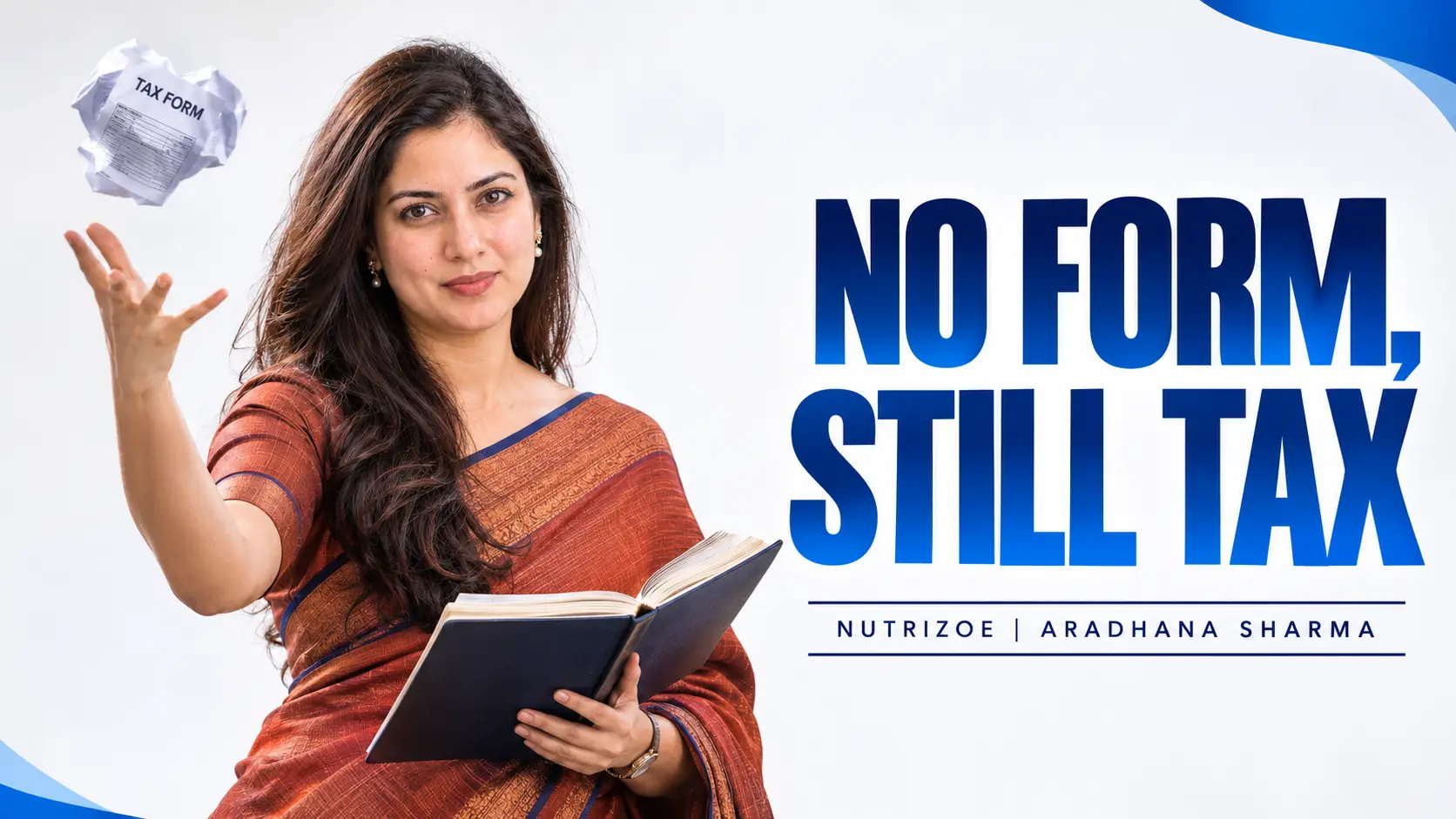
That relief is justified, but only partly. Fewer forms does not mean less tax. Whether you get a form or not, the income is still taxable, and the IRS is clear about that. This guide explains the 1099 threshold 2026 in plain words, for Indian freelancers in the US who are allowed to work for themselves, such as green card holders and citizens, and shows how to keep clean records so April never surprises you. I am not a tax professional; please confirm your own situation with one.
What changed in your mailbox, and what did not
The Freelancer Who Thought No Form Meant No Tax
Here is a scene that is more common than you might think. A freelance UI designer in Austin, a green card holder originally from Bengaluru, does small projects on the side for a few US startups and a couple of clients in India. In early 2026, she notices that only one client sent her a 1099-NEC. The others did not.
A friend tells her: “If they didn’t send a form, the IRS doesn’t know. Just report what’s on the form.” It sounds tempting. It is also wrong, and it could cost her a lot later.
She asks a tax preparer instead, who explains calmly that every dollar of business income is reportable, form or not. They sit down with her bank statements and payment app history, total her income, subtract her real business expenses, and file correctly. She pays a bit more tax than she hoped, but sleeps well. That is the spirit of this article.
What Changed: The 1099 Threshold 2026 in Plain Words
According to CPA Practice Advisor, two sections of the One Big Beautiful Bill Act changed the rules.
Section 70432 returned the Form 1099-K threshold, now commonly called the 1099-K $20000 threshold, to more than $20,000 in payments and more than 200 transactions, reversing the planned $600 threshold. The change was effectively retroactive, so the $600 phase-in never fully happened. The IRS’s own page on understanding Form 1099-K confirms that payment apps and online marketplaces must report payments when you receive more than $20,000 for goods or services in more than 200 transactions, though they may send forms below that level, and payment card processors send forms regardless of amount.
Section 70433 raised the Form 1099-NEC and 1099-MISC threshold from $600 to $2,000 for tax year 2026, with inflation adjustments from 2027. So a client who pays you $1,500 for a project in 2026 is generally not required to send you a 1099-NEC.
Put simply, the 1099 threshold 2026 means fewer forms for small amounts. It does not change what counts as income.
| Form | Who sends it | Threshold for 2026 |
|---|---|---|
| 1099-K (payment apps, marketplaces) | PayPal, Stripe, Venmo, marketplaces | More than $20,000 and more than 200 transactions (may send below) |
| 1099-K (payment card processors) | Card processors | Any amount |
| 1099-NEC | Clients paying you for services | $2,000, inflation-adjusted from 2027 |
| 1099-MISC | Payers for certain other income | $2,000, inflation-adjusted from 2027 |
Freelancer Income No 1099: Still Taxable, Every Dollar
This is the most important point in the whole article. The IRS states plainly that whether or not you receive a Form 1099-K, you must still report any income on your tax return. The same principle applies to 1099-NEC: the form is an information report, not the source of your tax obligation.
So freelancer income no 1099 situations are not tax-free situations. If a client pays you $1,800 for a logo and sends no form, that $1,800 is still business income. If you receive $12,000 through PayPal across 50 transactions and get no 1099-K, that $12,000 is still income.
Why does this matter so much? First, because it is the law. Second, because the IRS has other ways to see income, such as bank records, client reporting and data matching. Third, because unreported income can lead to penalties and interest that are far larger than the tax you avoided. And for immigrants, a clean tax record also matters for future applications, such as citizenship, where your tax history may be reviewed.
The Freelancers Union, in a November 2025 explainer, put it simply: not receiving a 1099-K does not make your earnings non-taxable, and the responsibility to report income remains on your shoulders.
PayPal 1099-K 2026: What to Expect From Payment Apps

For many Indian freelancers, PayPal is the main way US and international clients pay. So what does PayPal 1099-K 2026 look like?
Under the restored 1099-K $20000 threshold, PayPal and similar platforms must send a 1099-K when your payments for goods or services exceed $20,000 and 200 transactions in a year. If you are below either number, you may not receive one, though platforms can choose to send forms at lower levels, and some states have their own lower thresholds, as the Freelancers Union noted.
If you receive a 1099-K, check it carefully. It reports gross payments, before fees, refunds or expenses. Your actual taxable income is your gross income minus legitimate business expenses. Do not simply put the 1099-K number on your return without adjusting for refunds and fees, but also do not ignore it, because the IRS receives a copy.
Personal payments are another trap. If friends send you money for shared rent, dinner or a birthday gift, those are not taxable, and the IRS says they should not appear on a 1099-K. Mark personal payments as personal in the app where possible. Better still, keep a separate account or profile for business payments, so your records are clean.
1099-NEC $2000: What It Means for Small Client Projects
The 1099-NEC $2000 threshold mostly helps your clients, who now have less paperwork for small projects. For you, it means you may receive fewer forms if most of your projects are small.
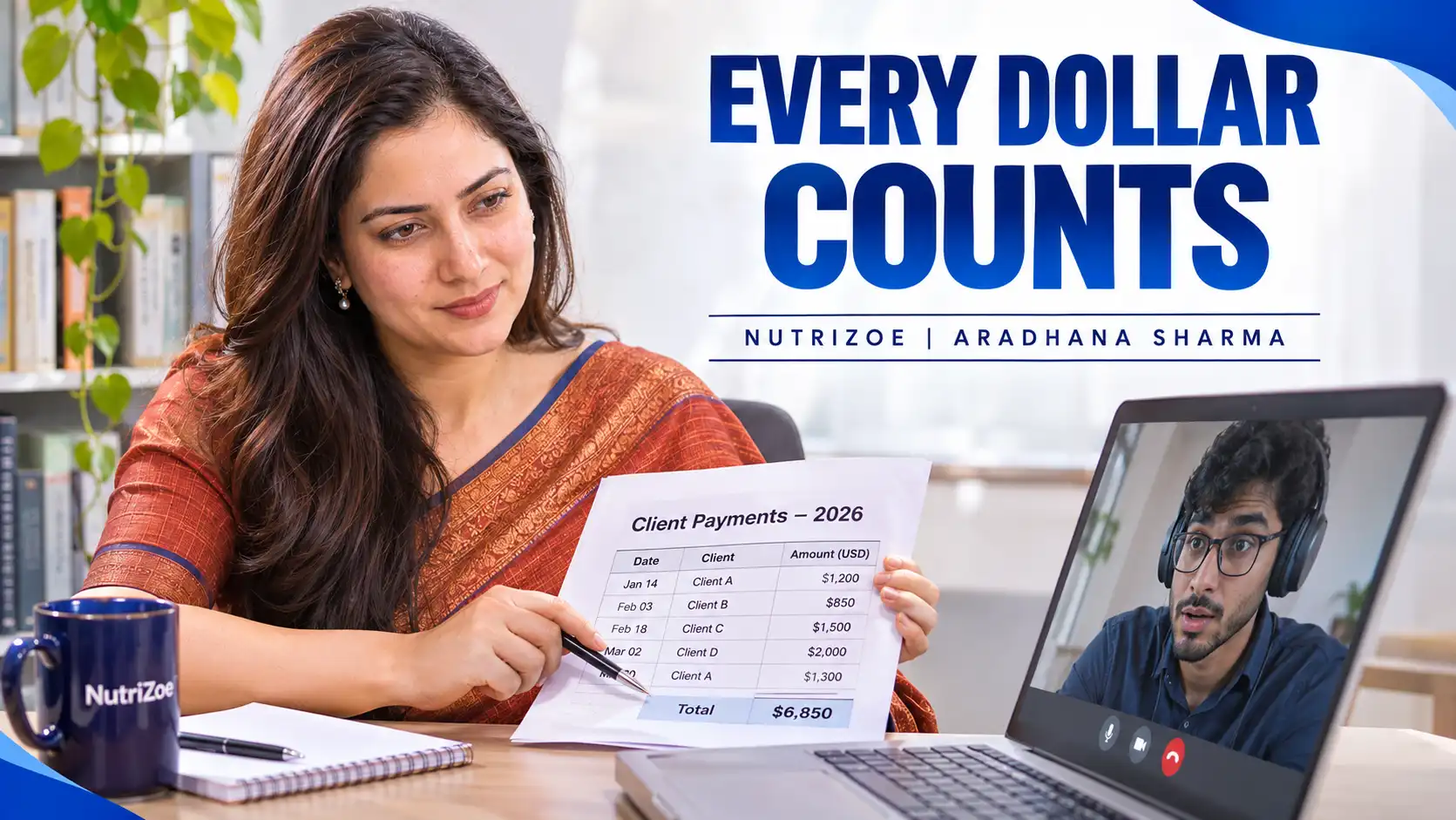
Do not let that make your record-keeping lazy. Many freelancers rely on 1099 forms to remember their income at tax time. With fewer forms, you need your own system. Keep a list of every client and every payment: date, amount, client, method of payment and invoice number.
If a client pays you more than $2,000 in 2026 and does not send a 1099-NEC, you still report the income. If a client sends you a form with a wrong amount, ask them to correct it, and report your actual income with an explanation if needed.
Clients may still ask you for a Form W-9 with your taxpayer identification number. That is normal. Provide it for US clients who request it. Indian clients will not send 1099 forms at all, which brings us to the next point.
Payments From Indian Clients Through Wise or Payoneer
Many Indian freelancers in the US also work for clients back in India, getting paid through Wise, Payoneer, bank transfers or Indian accounts. None of these Indian clients will send you a 1099. Does that income count?
If you are a US tax resident, the US generally taxes your worldwide income, including income from Indian clients. So yes, income from Indian clients is reportable on your US return, even with no US form at all. If any Indian tax was deducted on those payments, you may be able to claim a foreign tax credit, subject to US rules.

If you keep money in Indian bank accounts, remember US reporting rules for foreign accounts. FBAR and Form 8938 may apply depending on your balances. Our guides on forgetting to file FBAR explain what to do if you missed it in previous years.
Keep these payments in the same income record as your US clients. A freelancer’s tax return should reflect all business income, wherever it comes from. The 1099 threshold 2026 changes have nothing to do with foreign income; it was always reportable.
A Word of Caution for Visa Holders
Before going further, an important note. This article is for people who are allowed to be self-employed in the US, such as green card holders, US citizens, and some others with work authorisation that permits self-employment. Many Indians in the US are on H-1B, H-4 without EAD, F-1 or other statuses where freelancing for US clients may not be permitted, or is permitted only in narrow situations.
The 1099 threshold 2026 changes do not change immigration rules. Not receiving a 1099 form does not make unauthorised work acceptable. If you are on a visa and are thinking about freelancing, side gigs or an LLC, speak to an immigration attorney first. Your status is far more valuable than any side income.
If you already did freelance work and are unsure whether it was allowed, do not hide the income. Speak to an attorney and a tax professional together. Unreported income can create both tax problems and immigration problems later, and the two are best handled carefully, with advice.
Upwork, Fiverr and Other Marketplaces
Many freelancers find clients on marketplaces like Upwork and Fiverr. These platforms process payments, so they generally fall under the 1099-K $20000 threshold rules for third-party settlement organisations, rather than clients sending 1099-NEC forms directly.
That means if your earnings through a marketplace in a year exceed $20,000 and 200 transactions, you may receive a 1099-K from the platform. If you are below, you may not, unless the platform chooses to issue forms at lower levels or a state rule applies. Check your platform’s tax centre, which usually shows your annual earnings and any forms issued.
Remember that marketplace fees are typically deducted before money reaches you, but a 1099-K may show gross amounts. Your income record should show both gross earnings and fees, so you can report gross income and deduct the fees as business expenses. Do not double-count by reporting both the gross amount and your net payouts as income.
If you use multiple platforms, each one decides separately whether to issue a form. You might cross the 1099-K $20000 threshold on one platform but not another. Your own records, combining all platforms, are what you use for your return.
Selling Products Online vs Selling Services
Not all freelancers sell services. Some Indian solopreneurs in the US sell products online: handmade jewellery, Indian snacks, digital templates, printed art. The 1099-K rules apply to payments for goods as well as services.
If you run a product business, your taxable income is generally sales minus the cost of goods sold and business expenses. A 1099-K, if you receive one, shows gross sales, not profit. Keep records of what you paid for inventory, shipping, packaging and platform fees.
There is one more distinction the IRS mentions: personal items sold at a loss. If you sell your own used furniture or clothes for less than you paid, that is generally not taxable income, although you might still receive a form if a platform reports it. Keep records showing what you originally paid. Personal items sold at a gain are taxable.
For digital products like templates or courses, the same income rules apply. Track every sale, the platform fee and any refunds. Whether or not you receive a form under the 1099 threshold 2026, these sales are part of your business income.
What to Do if a 1099-K Is Wrong
Sometimes a 1099-K arrives with a number that does not match your records. It may include personal payments, refunds, or amounts that belong to another year. Do not panic, and do not ignore it.
First, compare it with your records. Identify exactly which payments are included and which are wrong. Second, contact the issuer, such as PayPal or the marketplace, and ask for a corrected form if the error is theirs. The IRS has guidance on what to do with Form 1099-K, linked from its main 1099-K page.
If you cannot get a correction in time, a tax professional can help you report the correct income and explain the difference on your return, rather than reporting an inflated amount or leaving out the form entirely. The IRS receives a copy of the form, so your return should account for it.
To avoid this in future, keep business and personal payments separate. Ask friends and family to use personal payment options for non-business transfers, and use a business profile for client payments. The cleaner your inputs, the cleaner any PayPal 1099-K 2026 form will be.
State Rules Can Be Different
The 1099 threshold 2026 changes are federal. Some states set their own rules for when platforms must report payments, and those may be lower than the federal threshold, as the Freelancers Union pointed out. Depending on where you live, you might receive a state-level form even if you are below the federal limit.
State income tax rules also vary. Some states have no income tax, others tax freelance income fully. If you moved states during the year, your income may be split between them. A local tax professional can tell you what applies in your state.
The basic principle stays the same everywhere: your income is reportable whether or not you receive a form. State thresholds just change how many forms you may see.
Self-Employment Tax Still Applies
When freelancers think about income tax, they sometimes forget self-employment tax. If your net earnings from self-employment are $400 or more in a year, you generally owe self-employment tax, which covers Social Security and Medicare, in addition to income tax. That rule did not change with the 1099 threshold 2026 update.
Self-employment tax is roughly 15.3% on net self-employment earnings up to the Social Security wage limit, with Medicare portions continuing beyond. It can be a shock for new freelancers who were used to having their employer pay half of these taxes. You can use our self-employment tax calculator to estimate what you might owe.
Because no employer withholds tax for you, most freelancers need to make quarterly estimated tax payments. The usual due dates are around 15 April, 15 June, 15 September and 15 January. Missing them can lead to penalties even if you pay the full amount at filing time.

A Simple Record-Keeping System for Freelancers
Here is a simple system that works for most Indian freelancers in the US under the 1099 threshold 2026 rules, whether you earn $5,000 or $150,000 a year.
Use one business bank account for all freelance income and expenses. Have clients pay into it, or transfer from PayPal and other apps into it regularly.
Keep a monthly income sheet: date, client, project, amount, payment method and invoice number. Add Indian clients too, with the rupee or dollar amount and exchange rate used.
Keep an expense sheet with receipts: software, equipment, a share of internet and phone, professional courses, co-working fees and other legitimate business costs. Save receipts in a cloud folder by month.
At the end of each quarter, total income and expenses, estimate your profit, and make your estimated tax payment. At year end, compare your income sheet with any 1099 forms you receive. Any difference should be explainable.
This system takes maybe an hour a month. It means that no matter what the 1099 threshold 2026 or future thresholds are, you always know your real income.
Common Mistakes Freelancers Make With 1099 Forms
The first mistake is reporting only what appears on forms. As we have seen, freelancer income no 1099 situations are still taxable. Your return should match your real income, not just the forms you received.
The second is reporting gross 1099-K amounts without deducting fees and refunds. A 1099-K shows gross payments. If you report that number as profit, you may pay more tax than you owe. Report gross income and then claim the related business expenses.
The third is mixing personal and business payments. When friends pay you back for dinner through the same PayPal account you use for clients, your records become confusing, and you may even receive a form that includes personal money.
The fourth is forgetting estimated taxes. With no employer withholding, freelancers who wait until April often face a large bill and an underpayment penalty.
The fifth is ignoring foreign income. Payments from Indian clients through Wise, Payoneer or Indian bank accounts do not come with 1099 forms, but they are generally reportable for US tax residents.
The sixth is assuming the new thresholds are permanent. The 1099-NEC $2000 threshold will be adjusted for inflation from 2027, and laws can change again. Your record-keeping should not depend on any particular threshold.
The seventh is not keeping receipts. Without receipts, business expenses are hard to defend if the IRS asks. A cloud folder with monthly subfolders solves this.
How Much to Set Aside From Each Payment
One of the most practical habits for freelancers is setting aside part of every payment for taxes as soon as it arrives. With fewer forms coming under the 1099 threshold 2026 rules, it is easy to lose track of how much you have earned, and even easier to spend money that really belongs to the tax bill.
There is no single right percentage, because it depends on your total income, deductions, state and filing status. Many freelancers set aside somewhere between a quarter and a third of their net freelance income to cover federal income tax, self-employment tax and state tax. Your tax professional can suggest a more accurate figure after looking at your situation once.
The method is simple. Open a separate savings account just for taxes. Every time a client pays you, move the chosen percentage into it immediately. When quarterly estimated payments are due, pay from that account. At year end, any extra stays as savings, and any shortfall is small.
This habit removes the biggest fear many freelancers have: the April surprise. It also helps you see your real take-home income, which makes pricing decisions easier. If you know you keep only around two-thirds of each payment after taxes, you will price your projects more realistically.
For Indian freelancers supporting family in India or saving for a home, this separation matters even more. Money sent home or saved should come from what is truly yours after tax, not from the tax account.
Your First-Year Freelancer Checklist
If 2026 is your first full year of freelancing in the US, here is a short checklist to stay on track.
Get an Employer Identification Number if you plan to work with many clients or want to avoid sharing your Social Security number widely. It is free from the IRS.
Open a separate business bank account and, if you use PayPal or similar apps, a business profile linked to it.
Set up your income and expense sheets, as described above, and update them monthly.
Calculate your expected profit each quarter and pay estimated taxes on time. Use the self-employment tax calculator to estimate.
Save receipts for every business expense in a cloud folder.
At year end, collect all 1099 forms you receive, compare them with your records, and give everything to your tax preparer. If you received a PayPal 1099-K 2026 form, check it line by line against your own record.
Review whether a retirement account like a Solo 401(k) makes sense for you before the deadlines.
And if you have accounts in India, review FBAR and Form 8938 requirements.
None of these steps is complicated. Together, they mean that your freelancer income no 1099 months and your many-forms months look the same on your return: accurate, complete and calm.
Planning Beyond Taxes: Retirement and Health
Once your freelance income is steady and well recorded, think about planning beyond the next tax bill. Freelancers do not get an employer retirement plan, but they can open their own.
A Solo 401(k) or SEP IRA can let you save for retirement and reduce your taxable income at the same time. Our guide to the Solo 401(k) for freelancers explains how it works, and the Roth IRA for freelancers guide covers another option. If you have a high-deductible health plan, an HSA can also be a powerful tool, as we discuss in our HSA retirement strategy for freelancers.
These accounts reward good records. When you know your net income clearly, you can decide how much to save and claim the right deductions.
Questions Freelancers Ask About the 1099 Threshold
What is the 1099 threshold 2026?
Form 1099-K is required from payment apps when payments exceed $20,000 and 200 transactions. Form 1099-NEC and 1099-MISC thresholds rose from $600 to $2,000 for tax year 2026.
Is freelancer income no 1099 still taxable?
Yes. The IRS says you must report all income whether or not you receive a Form 1099-K, and the same applies to 1099-NEC.
Will I get a PayPal 1099-K 2026?
Only if your goods-and-services payments exceed $20,000 and 200 transactions, unless PayPal chooses to send one below that or a state rule requires it.
What does 1099-NEC $2000 mean for me?
Clients generally do not have to send a 1099-NEC if they paid you less than $2,000 in 2026. You still report the income.
Do I report income from Indian clients?
If you are a US tax resident, yes. Worldwide income is generally taxable in the US, with possible foreign tax credit for Indian tax paid.
Do I still pay self-employment tax?
Yes, if your net self-employment earnings are $400 or more, regardless of whether you receive any 1099 forms.